 Español
  English
Trees can serve a valuable role in enhancing the aesthetics of your property while providing shade and oxygen-rich air. But trees have lifespans, and they can eventually die and cause issues on your property. Or a catastrophic storm could blow through and leave even healthy trees lying on the ground. When you have a tree that needs removal, it’s worth checking to see if your homeowners insurance will help you cover the cost.
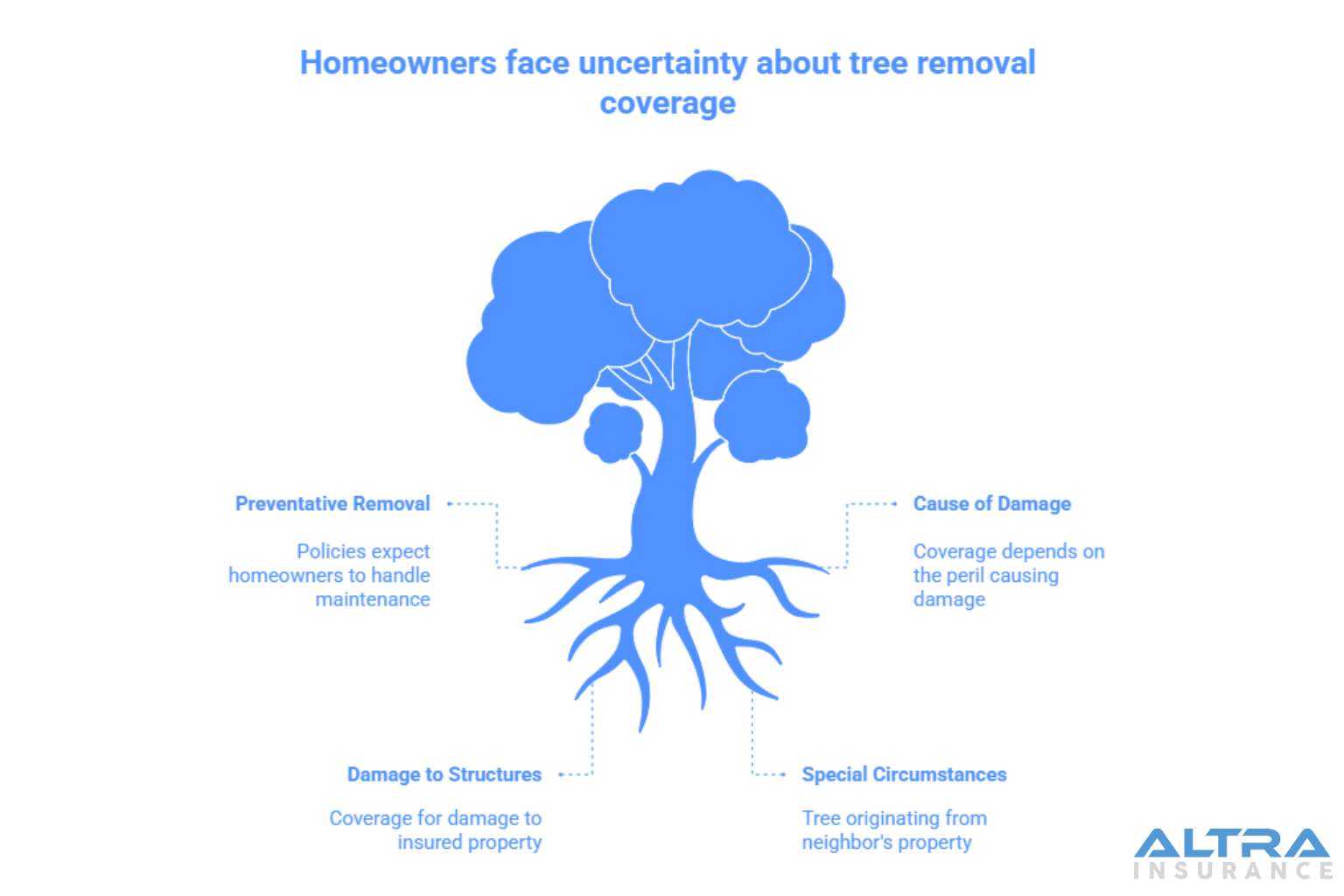
Expect to Pay for Preventative Tree Removal
Homeowners insurance policies are typically written with the underlying expectation that you’ll handle certain types of home maintenance. For instance, you’re required to repair or replace damaged appliances before they cause water damage to your property. The same is also true of tree removal. In most cases, you’ll need to cover the cost of removing trees that are posing a risk to your property. But there are a few instances when your insurance might help, such as when a perfectly healthy tree topples over due to a windstorm.
Note the Cause of Tree Damage
Sometimes, insurance companies cover tree removal that’s necessary due to covered perils. For instance, storm damage often includes fallen trees and branches. While you might be expected to pick up general storm debris on your own, major cleanup and restoration services might fall into the category of catastrophic natural occurrences. Since you can’t help it if lightning hits your tree, insurance companies are more likely to consider this an unavoidable source of damage.
Consider Damage to Other Structures
Seguro para propietarios de casas often covers repair and restoration services for damage that occurs to the exterior components of your property. For instance, you can reasonably expect that removing a tree that fell through a window might be necessary to replace the glass. The same could also be true if the tree landed on your home’s roof or tore down a wall. However, your insurance claim might be denied if the branches hadn’t been that close to your home in the first place. During a claim, insurance companies may inspect your property or analyze the scenario to determine if a claim is valid.
Check into Special Circumstances
In severe storms, it’s possible for a tree to end up on your property that was never there before. Closely spaced homes often involve neighbors having trees within close enough range of your property lines to land in your space. If this happens, it’s possible your neighbor’s insurance company will be responsible for handling the cost. Alternatively, you could have a situation where a tree falls on your car. Your auto insurance coverage might kick in for this type of situation.
Inquire about Your Specific Policy
When you aren’t sure what is covered for tree removal, it’s always best to consult with your insurance company. Knowing exactly what covered perils and situations exist in your policy helps you ensure your coverage meets your needs. While it’s best to know before a catastrophe strikes, you can call at any time to find out what your policy covers. If you own a home or are considering buying one, take the time to understand exactly what your homeowners insurance policy does—and doesn’t—cover. It could save you a lot of time and money. The friendly professionals at Altra Insurance Services will be happy to help you examine your current policy and determine if you have the coverage you need. We can also help you with renters insurance, commercial insurance, and seguro de auto en Chula Vista. Call one of our friendly agents today.